



Proton Pump
Proton pump is an integral membrane protein that is capable of moving protons across a biological membrane. Mechanisms are based on conformational changes of the protein structure or on theQ cycle. In cell respiration, the proton pump uses energy to transport protons from the matrix of the mitochondrion to the inter-membrane space. It is an active pump, that generates a protonconcentration gradient across the inner mitochondrial membrane, because there are more protons outside the matrix than inside. The difference in pH and electric charge (ignoring differences inbuffer capacity) creates an electrochemical potential difference that works similar to that of a battery or energy storing unit for the cell. The process could also be seen as analogous to cycling uphill or charging a battery for later use, as it produces potential energy. The proton pump does not create energy, but forms a gradient that stores energy for later use.
All Product Categories
-
Proton Pump Related Products (181)
Related Products (181)

-
Antibodies (1)
-
Pellitorine (Standard)
 0 ImagesCat. No.: HY-N3097RCAS No.: 18836-52-7Pellitorine (Standard) is the analytical standard of Pellitorine (HY-N3097). Pellitorine is a bioactive natural amide compound. Pellitorine can competitively antagonize the activation of TRPV1 by Capsaicin (HY-10448), thereby reducing pain signal transmission. Pellitorine improves cognitive dysfunction by upregulating the BDNF-ERK1/2-CREB and Nrf2-HO-1 pathways. Pellitorine exerts anti-inflammatory and anti-sepsis effects by inhibiting the release of high mobility group protein B1 (HMGB1) and the expression of RAGE/TLR4. Pellitorine exerts its antithrombotic effect by prolonging the clotting time, inhibiting the activity of clotting factors and thrombin. Pellitorine inhibits lipid peroxidation and resists ferroptosis by upregulating GPX4 and DHODH. Pellitorine kills Aedes aegypti mosquito larvae by inhibiting V-type H⁺-ATPase and aquaporin 4 (AaAQP4). Pellitorine exhibits anti-cancer activity (e.g., leukemia and breast cancer) and has inhibitory effects on certain bacteria.
-
Azeloprazole sodium
 0 ImagesCat. No.: HY-19865CAS No.: 955095-47-3Azeloprazole sodium is a potent proton pump inhibitor (PPI). Azeloprazole sodium can be used for gastroesophageal reflux disease (GERD) research.
-
ABA receptor agonist 1
 0 ImagesCat. No.: HY-162466CAS No.: 2981430-43-5ABA receptor agonist 1 (compound 4c) is a receptor agonist for abscisic acid (ABA). ABA receptor agonist 1 can inhibit seed germination and seedling growth of Arabidopsis and rice, stomatal closure and drought resistance of wheat and soybean.
-
Esomeprazole-d6 sodium
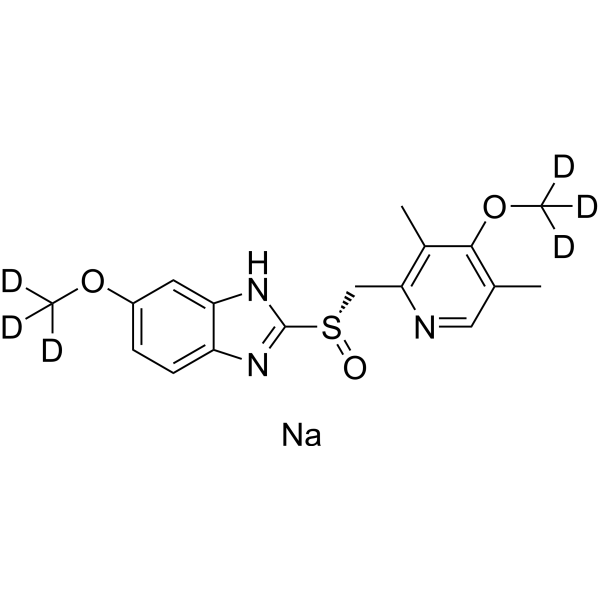 0 ImagesCat. No.: HY-17023SCAS No.: 922731-04-2Synonyms: (S)-Omeprazole-d6 sodium; (-)-Omeprazole-d6 sodiumEsomeprazole-d6 sodium is the deuterium labeled Esomeprazole. Esomeprazole ((S)-Omeprazole) is a potent and orally active proton pump inhibitor and reduces acid secretion through inhibition of the H+, K+-ATPase in gastric parietal cells. Esomeprazole has the potential for symptomatic gastroesophageal reflux disease research.
-
S 1924
 0 ImagesCat. No.: HY-123184CAS No.: 111371-30-3S 1924 is a potent H+, K+-ATPase inhibitor, with IC50 values of 10.3 and 1.6 μM at pH 7.4 and pH 6.0, respectively.
-
Pantoprazole sulfide-d8
 0 ImagesCat. No.: HY-W699907CAS No.: 1189977-42-1Pantoprazole sulfide-d8 is the deuterium labeled Pantoprazole sulfide (HY-W016033). Pantoprazole sulfide is a metabolite of Pantoprazole (HY-17507), which is a proton-pump inhibitor.
-
Pantoprazole-d3
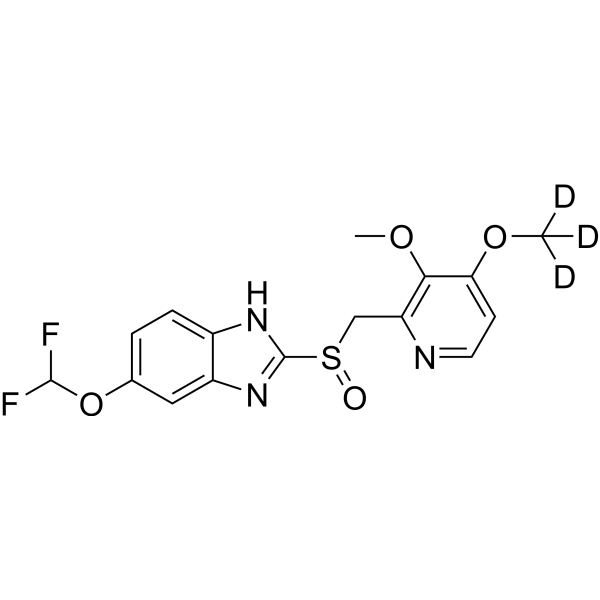 0 ImagesCat. No.: HY-17507S1CAS No.: 922727-37-5Synonyms: BY1023-d3; SKF96022-d3Pantoprazole-d3 is deuterium labeled Pantoprazole. Pantoprazole (BY10232) is an orally active and potent proton pump inhibitor (PPI). Pantoprazole, a substituted benzimidazole, is a potent H+/K+-ATPase inhibitor with an IC50 of 6.8 μM. Pantoprazole improves pH stability and has anti-secretory, anti-ulcer activities. Pantoprazole significantly increased tumor growth delay combined with Doxorubicin (HY-15142).
-
Concanamycin B
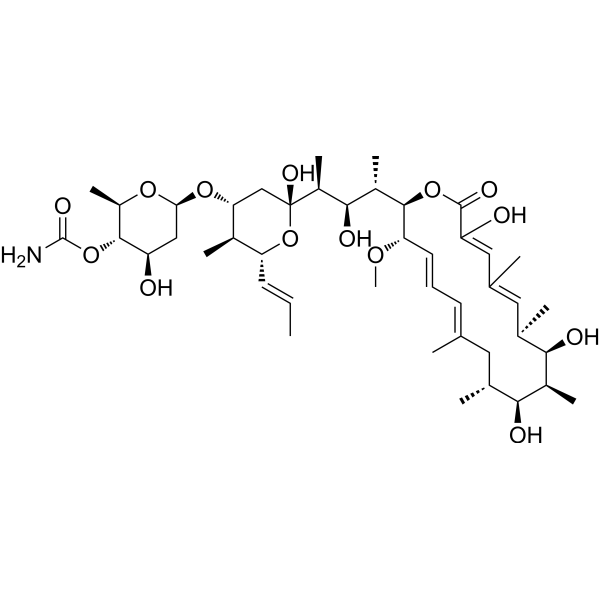 0 ImagesCat. No.: HY-125707CAS No.: 81552-33-2Synonyms: MCH 210Concanamycin B is a macrolide antibiotic, which can inhibit the cavitation type H+-ATPases, and the IC50 value is 5 nM.
-
Concanamycin A (purity≥90%)
 0 ImagesCat. No.: HY-N1724BCAS No.: 80890-47-7Synonyms: Antibiotic X 4357B (purity≥90%); Folimycin (purity≥90%); X 4357B (purity≥90%)Concanamycin A (purity≥90%) (Antibiotic X 4357B) is a macrolide antibiotic, a vacuolar type H+-ATPase (V-ATPase) inhibitor. Concanamycin A (purity≥90%) is also an inhibitor of lysosomal acidification, can be used to T cell-mediated inflammation research-.
-
Esomeprazole-d3 potassium
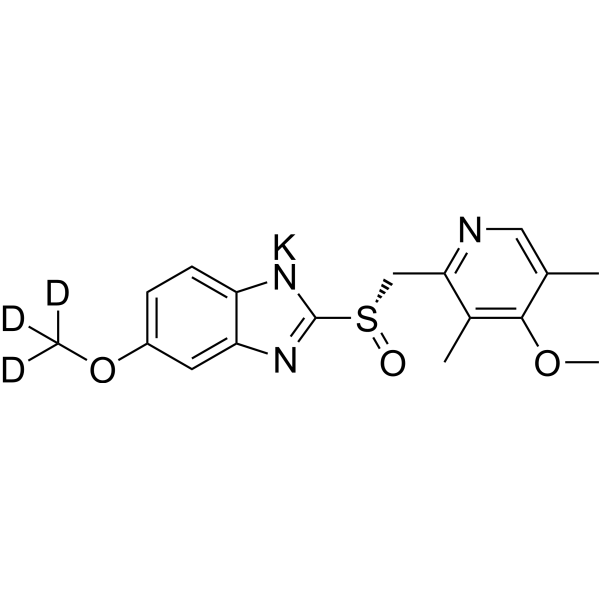 0 ImagesCat. No.: HY-17021S2Synonyms: (S)-Omeprazole-d3 potassium; (-)-Omeprazole-d3 potassiumEsomeprazole-d3 potassium is deuterated labeled Esomeprazole (HY-17021). Esomeprazole ((S)-Omeprazole) is a potent and orally active proton pump inhibitor and reduces acid secretion through inhibition of the H+, K+-ATPase in gastric parietal cells. Esomeprazole has the potential for symptomatic gastroesophageal reflux disease research.
-
AGN-201904Z
 0 ImagesCat. No.: HY-123662CAS No.: 651728-41-5AGN-201904Z is a compound that inhibits gastric acid secretion and is a new type of proton pump inhibitor that can produce more significant and lasting acid suppression effects than esomeprazole.
-
Lansoprazole sulfone-d4
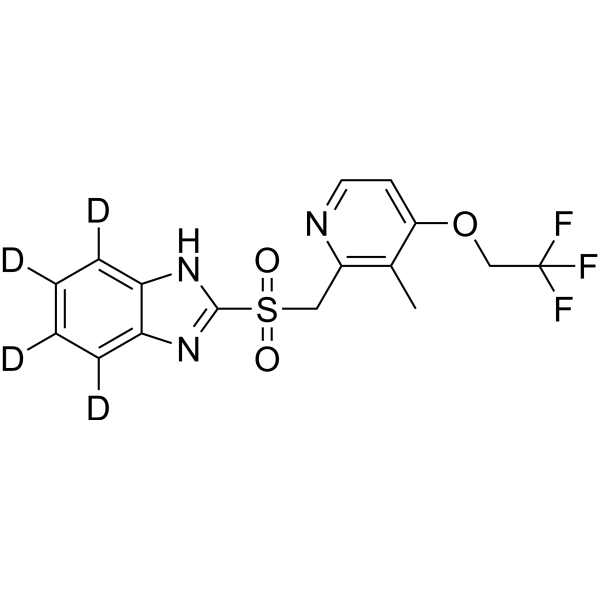 0 ImagesCat. No.: HY-W008614SCAS No.: 1184999-77-6Synonyms: AG-1813-d4Lansoprazole sulfone (AG-1813)-d4 is the deuterium labeled Lansoprazole sulfone (HY-W008614). Lansoprazole sulfone, Lansoprazole (HY-13662) metabolite, is a H+, K+-ATPase inhibitor. Lansoprazole sulfone has potential applications in duodenal ulcer, gastric ulcer, gastroesophageal reflux disease and Zolinger Ellison disease.
-
A88696C
 0 ImagesCat. No.: HY-N19130CAS No.: 155520-96-0A88696C is a gastric H+/K+ ATP-ase inhibitor with a pig IC50 of 59 μM. A88696C inhibits gastric ATP-ase activity.
-
Rabeprazole-d4 potassium
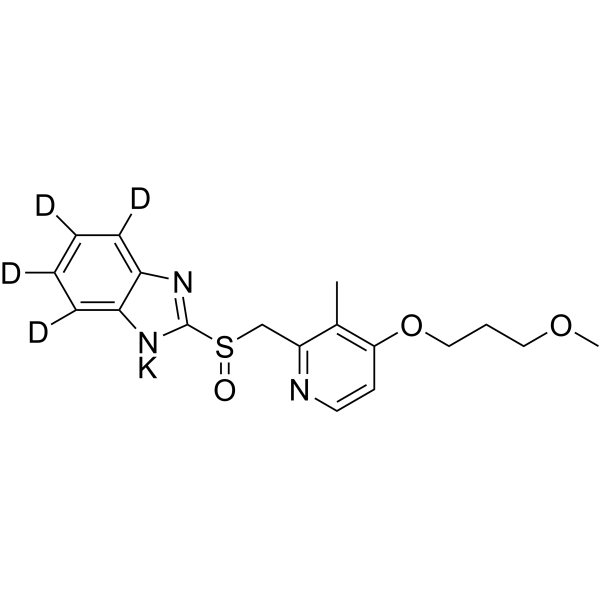 0 ImagesCat. No.: HY-B0656AS2Synonyms: LY307640-d4 potassiumRabeprazole-d4 potassium is deuterated labeled Rabeprazole potassium. Rabeprazole (LY307640) is a second-generation proton pump inhibitor (PPI) that irreversibly inactivates gastric H+/K+-ATPase. Rabeprazole induces apoptosis. Rabeprazole acts as an uridine nucleoside ribohydrolase (UNH) inhibitor with an b>IC50 of 0.3 μM. Rabeprazole can be used for the research of gastric ulcerations and gastroesophageal reflux.
-
Omeprazole-d3-1
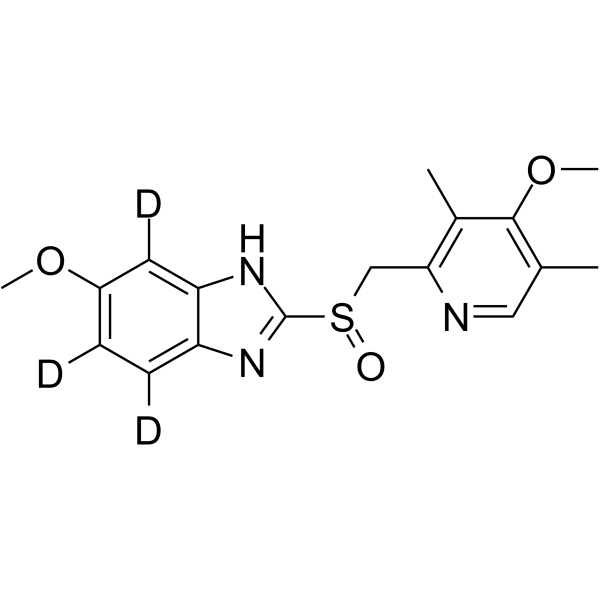 0 ImagesCat. No.: HY-B0113S1CAS No.: 934293-92-2Synonyms: H 16868-d3-1Omeprazole-d3-1 is the deuterium labeled Omeprazole. Omeprazole-1 (H 16868) is an orally active H+,K+-ATPase inhibitor and a proton pump inhibitor. Omeprazole-1 competitively inhibits CYP2C19, CYP3A4, and CYP2C9 activity. Omeprazole-1 inhibits gastric acid secretion and can be used for acid-related gastrointestinal disorders. Omeprazole-1 inhibits pancreatic cancer cell proliferation, induces apoptosis, autophagosome accumulation (elevated LC3-I and LC3-II levels), oxidative stress, and cytogenetic imbalance, modulates lysosomal transport, reduces inflammatory cytokines. Omeprazole-1 alters small intestinal morphology and magnesium absorption, and induces gastric mucosa morphologic changes. Omeprazole-1 aslo has neuroprotective and antibacterial effects.
-
Tubulin polymerization/V-ATPase-IN-1
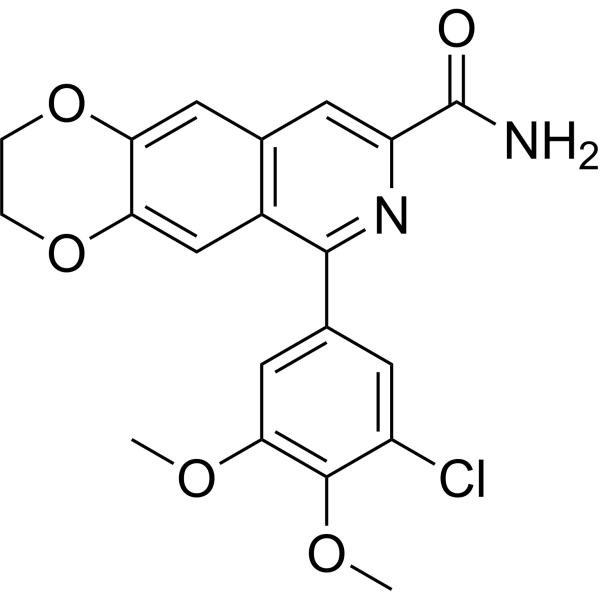 0 ImagesCat. No.: HY-162264CAS No.: 3032401-72-9Tubulin polymerization/V-ATPase-IN-1 (compound F10) is a Tubulin polymerization/V-ATPase inhibitor. Tubulin polymerization/V-ATPase-IN-1 shows robust antiproliferation activity against four human cancer cell lines, and exerts antiproliferative activity by inhibiting tubulin and V-ATPase. Tubulin polymerization/V-ATPase-IN-1 induces immunogenic cell death in addition to apoptosis, and inhibits tumor growth in an RM-1 homograft model with enhanced T lymphocyte infiltration.
-
Rabeprazole sulfide-d4
 0 ImagesCat. No.: HY-W719463Rabeprazole sulfide-d4 is the deuterium labeled Rabeprazole Sulfide (HY-W003467). Rabeprazole Sulfide is an active metabolite of Rabeprazole. Rabeprazole is a proton pump inhibitor that suppresses gastric acid secretion through an interaction with (H+/K+)-ATPase in gastric parietal cells. Rabeprazole markedly inhibits the motility of H. pylori. Rabeprazole has the potential for various peptic diseases treatment.
-
Eprazole trisulfide dimer
 0 ImagesCat. No.: HY-177424Eprazole trisulfide dimer is a trisulfide dimer of Ilaprazole (HY-101664), an orally active proton pump inhibitor that irreversibly inhibits H+/K+-ATPase in a dose-dependent manner with an IC50 of pump inhibitory activity of 6 μM in rabbit parietal cell preparation. Eprazole trisulfide dimer can be utilized in research on gastric ulcers.
-
Tiludronate
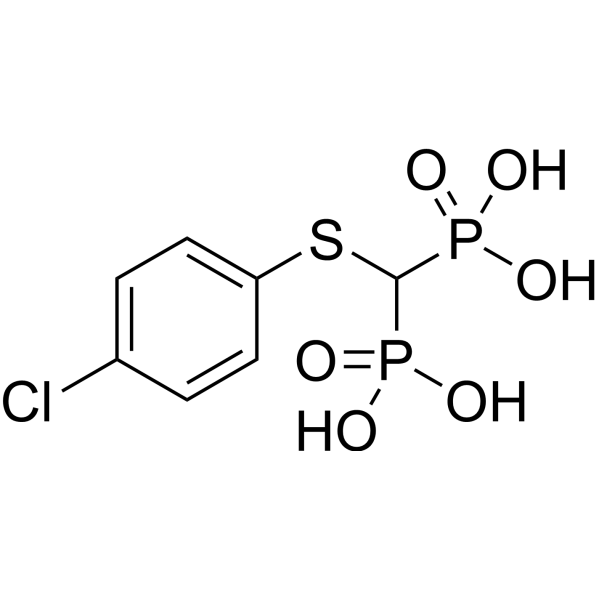 0 ImagesCat. No.: HY-A0213CAS No.: 89987-06-4Synonyms: Tiludronic acidTiludronate (Tiludronic Acid), an orally active bisphosphonate, can act an osteoregulator. Tiludronate is used for the research of the metabolic bone disorders. Tiludronate is a potent inhibitor of the osteoclast vacuolar H(+)-ATPase. Antiresorptive and anti-inflammatory properties.
-
Ilaprazole-d3
 0 ImagesCat. No.: HY-101664SCAS No.: 1070969-17-3Synonyms: IY-81149-d3




